Reason for writing: with the recent growth of some really baseless ideas
about how to maintain the deterrent, mainly with the idea that reducing hull
numbers is going to deliver the required security and deliver cost savings, it
seemed appropriate to put together some other alternatives.
·
http://amphibiousnecessity.blogspot.co.uk/2013/04/april-2013-notes-strategic-deterrent.html
·
http://www.telegraph.co.uk/news/uknews/defence/10181734/Lib-Dem-plans-to-cut-Trident-would-save-just-50-million-a-year-says-Philip-Hammond.html
·
http://www.telegraph.co.uk/news/uknews/defence/10181170/Abandon-Trident-at-your-peril-warn-former-defence-ministers-and-Forces-chiefs.html
·
http://defense-update.com/20130713_us-intelligence-report-a-cut-paste-on-chinese-missiles.html
·
http://www.telegraph.co.uk/news/worldnews/asia/northkorea/10181736/North-Korean-ship-caught-smuggling-weapons-and-missile-material-through-Panama-Canal.html
·
http://www.telegraph.co.uk/comment/telegraph-view/10180221/Deterrence-cant-be-done-on-the-cheap.html
·
http://www.independent.co.uk/news/uk/politics/trident-fleet-may-be-cut-to-two-submarines-in-new-lib-dem-plan-8708328.html
·
http://blogs.telegraph.co.uk/news/shashankjoshi/100226784/do-we-still-need-a-nuclear-deterrent-the-costs-and-benefits-of-renewing-trident/
Key Words/Phrases:
·
NATO: North Atlantic Treaty Organisation – Britain’s
principle strategic alliance,
·
5 Power Defence Arrangement: UK, Malaysia, Singapore,
Australia and New Zealand.
·
Littoral: the coastal regions of sea
·
AIP: Air Independent Propulsion,
·
SSN: Nuclear Attack Sub
·
SSK: Diesel (AIP) powered Attack Sub
·
SSBN: Nuclear powered Ballistic Missile Submarine
·
SSGN: Nuclear powered Cruise Missile submarine.
·
Multiple Independently Targetable Re-Entry Vehicle
(MIRV): these are what are actually important, each missile carries several of
these, each with their own nuclear device.
·
Trident: the current missile system used by Britain
& the United States, can carry 12 MIRVs, but in British use only carries 5
– in accordance with the limit imposed by the START treaties. It has a range of
about 7,000 miles meaning it can hit pretty much anywhere from anywhere; especially
when compared with the Tomahawk cruise missile (the longest ranged one
currently in service) which has a range of only 1,000 miles.
·
Vanguard class: the
current serving generation of Britain’s nuclear deterrent submarines (SSBNs),
excellent vessels but like the Resolution class before them they
are now approaching they end of their service lives and hence we are now facing
this debate, as its them which are due to be replaced… not the missiles they
carry.
·
Eurofighter Typhoon: Principle aircraft belonging to
the Royal Air Force at the moment, as its name suggests it was procured through
a joint European development.
·
TLAM: Tactical Land Attack Missile more commonly
called a Cruise missile
Context/Analysis:
There have been three main thrusts
of argument/debate around the future of Britain’s strategic deterrent, the
first two, whether to have a deterrent and what methodology that deterrent
should utilise where covered in a previous notes,
however now the debate has moved into is third phase (as it is now pretty much
agreed Britain needs a deterrent, and that Trident is better than the other
options) what the actual design/strength of the force should be? For both
issues there are a range of options available - design wise there are five
options for the Trident Replacement or Ramillies
class:
·
Option
1: Original Design
·
Option
2: Partner America
·
Option
3: Partner France
·
Option
4: Build modified Astute class
·
Option
5: Build more Vanguards
Option 1 is the most expensive option; starting from scratch
building a whole new construction would also take the longest – most
importantly it would disregard work which has already been done and therefore
would be a waste of taxpayers’ money.
|
Option 2 has
benefits in terms of shifting the costs, and is already to extent being done;
but it would create problems which could well increase cost/decrease benefit
to UK economy because as Britain would be seeking to purchase far fewer
vessels than the Americans – as with the F-35 a situation might arise where
not all decisions are to the best interest of British strategy, capability or
industry. This would not happen because of intention but by virtue of
situation; and in such a situation a government might well find itself having
to explain decisions to public that it doesn’t agree with, doesn’t fully understand
and would really have preferred not to happen.
|
|
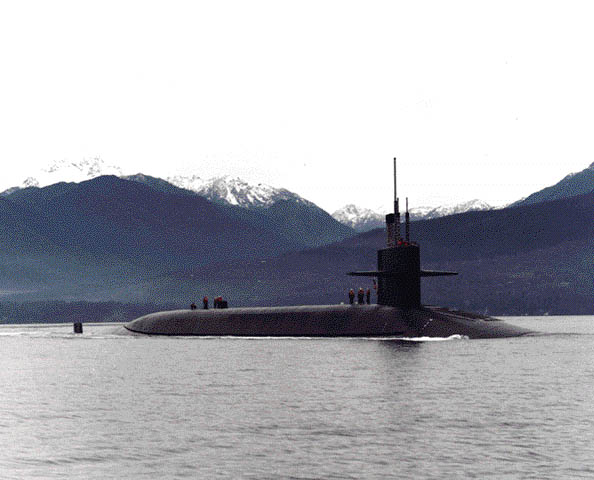
Figure 1 USS Henry M. Jackson an Ohio class SSBN of the United States
Navy
|
|
|
Option 3 would on
the face of it seem sensible as that would be two European based medium
powers working together and it would build on a current high level of
UK/French nuclear interaction; the trouble with the idea though is the legacy
of the Horizon frigate and many other projects have shown that the
Eurofighter (in the fact it actually has entered service with most of the
countries it was supposed to) is the exception not the rule; and even though
Britain’s economy is bad, at the moment the French economy looks worse so it
would not seem a good time for such collaboration.
|
Figure 2 Le Terrible of the Triomphant class SSBN of the French
Navy
|
Options 4 & 5 are based around the already available
missile compartments, instead of Britain designing a ‘new vessel’ for the Ramillies; with option 4, the Astute design would be cut in half and
the new compartment inserted. Whilst with option 5 the old compartment would be
deleted and the new design inserted. These last options have the advantage of
being able to re-use a lot of ‘off-the-shelf’ technology (in terms of it
already having been built before so only minor development costs).
In terms of force structure there are six options that could
fit within the British defence budget:
·
Force
A: build two – all SSBNs
·
Force
B: build three – all SSBNs
·
Force
C: build four – all SSBNs
·
Force
D: build four – 3 SSBNs & 1 SSGN
·
Force
E: build five – 3 SSBNs & 2 SSGNs
·
Force
F: build six – 3 SSBNs & 3 SSGNs
Force A would be virtually & practically pointless, as
was outlined in the previous notes having a deterrent which is not capable of
being maintained at all times is not a deterrent but a risk – because any
increase of deployments, any ramping up of readiness could be seen as
provocation. Two submarines as suggested by some just would not be a safe
foundation for British national security. This would be similarly the case with
Force B; accidents happen, even to these submarines
- and whilst a grave risk is being taken with aircraft carriers/aviation ship
strength,
taking such a risk with the deterrent would not be gambling with British, it
would be unlocking the gate and throwing away the keys. This is not an
overstatement; imagine the situation, tensions are rising suddenly, powers who
ten years ago were allies are now armed with WMDs and facing off against each
other – into this the British government reacting to rising tensions sends out
to sea the deterrent. It’s going to be noticed, even if through sheer weight of
intelligence and media assets that will be focused on it rather than anything
particularly new aged. This will immediately raise tensions further; it can’t
help but not, as it’s the nation state equivalent of in the middle of argument
one of the guys pulling out a grenade to supplement their knife – whilst
theorists differ to extents they’d all agree with it being a rather bad thing
to do.
Therefore this would make a mockery of the deterrent as was discussed in the
previous notes.
In contrast a continuous at sea deterrent would be there, but not there – it’s
being at sea would not raise tensions, as that is just the operational norm.
This is why a continuous deterrent is the only true deterrent as it will
provide a back stop for supporting negotiations whilst not through the
requirements of circumstance running the risk of inflaming it.
Force C is what Britain has always had (although originally 5
vessels were proposed for the Resolution
class), it is a guarantee of security; but it is a very rigid force and would
limit government options as well as the justification of the force. However
prior to this option, it would be impossible for the 1st Sea Lord to
guarantee the maintenance of a continuous at sea deterrent - as David Cameron
has stated his support for.
Forces D-F are different, they represent a realisation that 7
Astute SSNs and 2 Queen Elizabeth class aircraft carriers
(even if the RN gets more aviation ships, the Type 45s are retrofitted with
MK41 VLS cells so that they can carry cruise missiles, and the future escorts
all have such a capability) do not provide the RN with the necessary tactical
strike capability that underpins Britain’s patent pending method of deploying
strength through guile to punch above its weight. Therefore the case for a
cruise missile carrying submarine, an SSGN, is very strong, and very achievable.
The USN have already converted some old SSBNs to SSGNs by the
use of a slot in system (called the Multiple All-Up-Round (AUR) Canister (MAC)),
allowing for the ballistic missile tubes to be filled with 7 Tomahawk TLAM.
Even though the new class are going to have only 12 tubes rather than the 16
carried by the Vanguard Class,
or the 24 tubes of the Ohio class, it
would still allow the carriage of 84 Cruise Missiles. This would be roughly the
same amount of missiles as all the Astute
class SSNs in the RN’s inventory.
Therefore providing a massive increase initial strike capability &
flexibility of British force, specifically in terms of an Anti-Anti-Access System
– the ability of SSGNs to get closer to the enemy shore line than other
platforms (i.e. aircraft carriers and surface warships) without being detected,
allows for the possibility of launching ‘behind enemy lines’.
|
|
Figure 3 The silos with MAC
|
|
|
Figure 4 The Ohio
class SSGN
|
Figure 5 A close up on the MAC
|
|
In terms of diplomacy
the government would gain the ability to hint or even announce the deployment
of an SSGN to an area – representing a very sobering proposition to any
country, not on the same level as a Carrier Battle Group or an Amphibious Task
Group; but a vessel which has the same ability to disappear as those most
elusive of submarines an SSBN, making it virtually impossible to find, and loaded
with 84 cruise missiles. Although no submarine can act as a visible
deterrent/show the flag as their very lethality relies upon the stealth which
is afforded them by their travels beneath the waves – thus limiting their
impact upon an enemy of limited imagination. However, even if such a vessels
presence didn’t persuade a government to come to the negotiating table, it
would be able to rapidly respond to any change in situation and could be used
by the British government to impede any action contrary to their interests or
wishes.
Furthermore, vessels which are indistinguishable from each
other would keep watchers unsure as to whether they are seeing a SSBN or an
SSGN go out on patrol, making it more difficult for patrols to be monitored.
Supplementary to all this there is the long term advantage
that if in the unlikely event that ballistic missiles are done away with by
treaty at a future date,
then the vessels would be easily converted to SSGN and therefore would still be
of use for the remainder of their career.
Key Points:
For & Against on the preferred
Design/Development options for Ramillies
class strategic submarine
·
Option 2: Partner America
o Advantage:
reduction in costs/access to large research & development pool
o Disadvantage:
loss of control
·
Option 4: Build modified Astute class
o Advantage:
Commonality will reduce training, maintenance and procurement costs, whilst
maintaining
o Disadvantage:
the design will not be able to be as optimised for the role as previous designs
were
·
Option 5: Build more Vanguards
o Advantage:
A design which is well known and proved in its role.
o Disadvantage:
Times have changed, the costs of updating the design to include the off the
shelf available stuff from the Astute
class
For & Against on the preferred Force
Structure options for Ramillies class
strategic submarine
·
Force D: build four – 3 SSBNs & 1 SSGN
o Advantage:
cheapest and keeps to the letter of the reduction, but provides the resilience
of four boats
o Disadvantage:
the SSGN capability is more an in name only, as it will be the SSGN or boat in
long term refit…
·
Force E: build five – 3 SSBNs & 2 SSGNs
o Advantage:
Continuous at Sea Deterrent guaranteed and more often than not an on call SSGN
to respond to situations, provides more operational flexibility in terms of
only 7 SSNs as if two SSGNs are available then one could be used to provide the
deterrent guard or alternatively ASW support for a Task Group.
o Potential:
whilst normally it there would be assigned 1:1:3 (in terms of SSGN, Major Refit
and SSBN), the five vessels give the potential that should circumstance demand
a second vessel could be made into an operational SSGN with minimal effort and
minimal disruption to operations – the benefit of having five vessels being the
slack within the system when compared to four, that would allow for disruptions
in this way and still keep it all going and provide for proper maintenance.
o Disadvantage:
facilities have been designed around four or less units so would require
modification to facilities to provide space for the fifth, would require a
slight increase in personnel numbers
(but considering SSBNs operate as standard with 2 crews for each boat, in order
to get the maximum out of then, the five vessels will only require the
equivalent of the 8 crews already in service as the SSGNs will not an extra
crew)
·
Force F: build six – 3 SSBNs & 3 SSGNs
o Advantage:
Guaranteed Continuous at Sea Deterrent and all but Guaranteed Continuous at Sea
Stealth Strike
o Disadvantage:
most expensive, would require extra personnel and facilities
Points of Interest:
·
Cruise missiles from USS Florida were a key part of Libyan campaign
|
|
Figure 6 HMS Vanguard lead
ship of the RN’s current class of Trident Submarines
|
Summary:
Overall it’s the number of vessels
that are built that will decide whether the Continuous at Sea Deterrent can be
guaranteed, four vessels guarantees it, but those units are only really going
to be able to be used for SSBNs – a wasted opportunity. Therefore operationally
five vessels, as was originally planned for the Resolution class would seem appropriate for the Ramillies class as it offers both
Guaranteed Continuous at Sea Deterrent as well as a continuous SSGN deployment
capability, one extra vessel and the whole scenario is changed from being
focused on purely SSBN/Strategic Deterrent mission to providing an SSGN
tactical capability alongside it.
In terms of Design with the missile
compartments already having been designed jointly with the USN. When this is
put alongside the fact that the Astute class
have, arguably, reached a significant level maturation now that the sixth
vessel has had its keel laid down and seven has been decided upon as the final
number -
surely combining those two components (exceedingly complex but still
‘components’) would be a relatively inexpensive proposition. Something which
would especially be true if the long term savings of significant similarity
between the vessels is taken into account, i.e. in terms of training, parts,
maintenance, logistical support.
Therefore the recommendations for
the Ramillies class would be a design
which is a combination of Options 4 & 2 and Force structure of E.
How it would work out compared to current
|
Current (Vanguard)
|
Proposed (Ramillies)
|
|
1 vessel in Major Refit
|
1 SSGN vessel in Major Refit/training *
|
|
1 vessel in patrol refit/training
|
1 SSBN vessel in patrol refit/training
|
|
1/2 vessel travelling to or from patrol
|
1 SSBN vessel travelling to or from patrol
|
|
1 vessel on patrol
|
1 SSBN vessel on patrol
|
|
|
1 SSGN vessel in training/readiness
|
* when a vessel is needed for
major refit it would have it’s missiles taken out and be designated an SSGN,
and one of the SSGNs transferred to SSBN duties, therefore only 3 SSBNs would
be in service at a time.
Further Reading:
·
http://www.thinkdefence.co.uk/2013/07/trident-alternatives/
·
http://www.mod.uk/NR/rdonlyres/7F9F5815-C67B-47B1-B5C4-168E8AB50DC3/0/submarine_initial_gate.pdf
·
http://www.defencemanagement.com/news_story.asp?id=23459
·
http://www.globalsecurity.org/military/systems/ship/ssgn-726.htm
·
http://www.fas.org/programs/ssp/man/uswpns/navy/submarines/ssgn726_ohio.html
·
http://www.direct.gov.uk/prod_consum_dg/groups/dg_digitalassets/@dg/@en/documents/digitalasset/dg_191634.pdf
·
http://www.telegraph.co.uk/comment/letters/10186467/The-need-for-four-nuclear-armed-submarines.html
 For the inaugural edition of Sea Control’s “East Atlantic” series, Alexander Clarke brings on Steve George, former engineer with the F-35 program and Royal Navy veteran to discuss the challenges and misconceptions of the F-35 program. Remember, subscribe on iTunes or Stitcher Stream Radio. Leave a comment and five stars!

2.jpg)